Broadcom shares drop after report of Google TPU 8i order cut
Broadcom (AVGO) shares fell 11.4% on Friday after TF International Securities analyst Ming-Chi Kuo reported that Google has reduced its 2027 orders for the Broadcom TPU 8i chip series. Kuo’s industry survey indicates Google is trimming 2027 shipments by roughly one million units, or about 20%, with the bulk of the reduction affecting the higher-priced 8i Max model, code-named Whalefish. (Source: stockanalysis.com)
The survey suggests Google plans to shift more volume toward its TPU 8t series, which is designed by MediaTek (TPE:2454). Kuo linked the adjustment to Google’s stated priority of allocating compute resources to frontier model development amid tight supply chains and data-center power constraints. Neither Broadcom nor Google has commented publicly on the report.
Long-term Broadcom-Google TPU deal and TPU 8i specifications
An April 2026 SEC filing shows Broadcom holds a long-term agreement to design and supply future Google tensor processing units, including the inference-focused 8i Max, with the contract running through 2031. The arrangement also encompasses Anthropic collaborations and multi-gigawatt AI rack deployments, according to the filing.
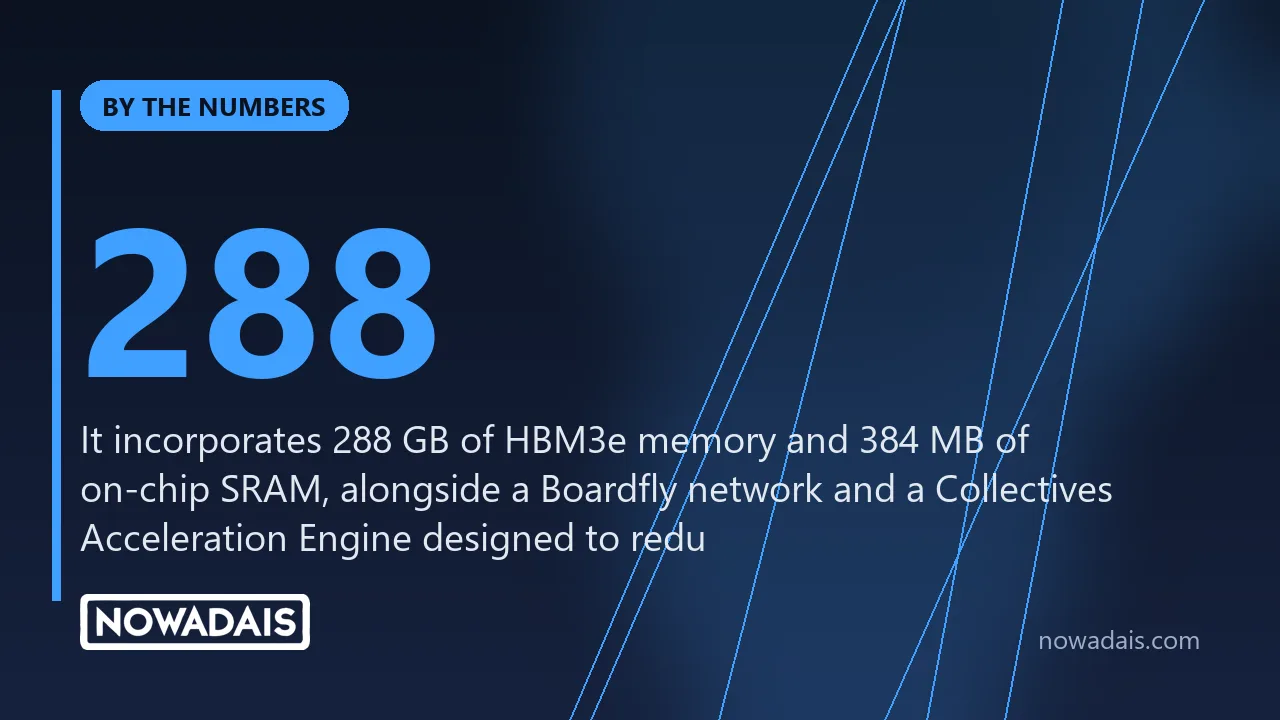
The TPU 8i is marketed for inference and reasoning workloads and delivers roughly 10.1 FP4 PFLOPs. It incorporates 288 GB of HBM3e memory and 384 MB of on-chip SRAM, alongside a Boardfly network and a Collectives Acceleration Engine designed to reduce synchronization latency.
What the TPU 8i cut means for Broadcom and Google’s AI infrastructure strategy
The reported reduction of roughly one million Broadcom TPU 8i chip units for 2027 signals a recalibration of Google’s accelerator roadmap rather than a rupture with Broadcom. Analyst Ming-Chi Kuo ties the shift to Google’s explicit priority of reserving compute for frontier model development while navigating supply-chain and power constraints. By moving more inference volume to the MediaTek-designed TPU 8t series, Google appears to be diversifying its supplier base and optimizing its silicon mix for different workload tiers, even as industry reports indicate it will retain Broadcom’s higher-margin 8i architecture for select high-performance use cases.
Broadcom’s September commentary presents a contrasting near-term picture. CEO Hock Tan described the engagement with Google as stronger than ever and noted that Broadcom shipped the TPU 8i ahead of MediaTek’s competing design despite a later project start. That execution track record, combined with a contractual relationship extending through 2031, suggests Broadcom remains a core strategic partner. The sharp share-price reaction—amplified by an 8% drop in the broader PHLX Semiconductor Index—likely reflects investor concern over the revenue trajectory of a high-profile program rather than a fundamental loss of the account.
Wednesday’s fiscal fourth-quarter earnings call will be the first formal opportunity for Broadcom management to address the 2027 order outlook. Until then, the order adjustment reads as a portfolio optimization by Google under constrained resources, not a wholesale displacement of Broadcom’s silicon from Google’s AI infrastructure.
Key facts: Broadcom TPU 8i chip order reduction
- Broadcom shares fell 11.4% after analyst Ming-Chi Kuo reported Google cut 2027 TPU 8i orders by roughly one million units, or about 20%.
- The reduction primarily affects the higher-priced 8i Max model, code-named Whalefish.
- Google plans to shift more volume to the TPU 8t series, which is designed by MediaTek.
- An April 2026 SEC filing shows Broadcom holds a long-term agreement to design and supply Google TPUs, including the 8i Max, through 2031.
- Broadcom CEO Hock Tan said in September that engagement with Google “has never been stronger” and that Broadcom shipped its chip ahead of MediaTek’s design.
By the numbers: TPU 8i order cut and market reaction
The following table captures the principal quantitative moves reported on Friday, from the order adjustment at Google to the broader market selloff and the flight to bonds.
| Metric | Value |
|---|---|
| Broadcom share decline | 11.4% |
| TPU 8i 2027 shipment reduction | ~1M units (~20%) |
| PHLX Semiconductor Index decline | 8.0% |
| S&P 500 decline | 2.1% |
| Nasdaq 100 decline | 3.7% |
| 10-year Treasury yield move | 5.05% to 4.94% |
Open questions: What remains unconfirmed about Google’s 2027 TPU roadmap
- Neither Broadcom nor Google has commented publicly on the report, leaving the order adjustment unverified by the companies involved.
- Analyst Ming-Chi Kuo stated that the details of the shipment mix shift are not final yet, so the exact split between TPU 8i and TPU 8t volumes for 2027 remains undisclosed.
- It is unclear whether the 2027 order reduction affects the terms of the long-term agreement, disclosed in an April 2026 SEC filing, that extends Broadcom’s TPU design and supply relationship with Google through 2031.
- Broadcom’s fiscal fourth-quarter earnings call on Wednesday, December 9, marks the first scheduled opportunity for management to address questions about Google’s 2027 plans.
Sources and further reading
Frequently Asked Questions
How does the Broadcom TPU 8i’s performance and memory configuration compare to the MediaTek‑designed TPU 8t?
The TPU 8i delivers about 10.1 FP4 PFLOPs of inference performance and is equipped with 288 GB of HBM3e memory plus 384 MB of on‑chip SRAM, targeting high‑end workloads. In contrast, the TPU 8t is positioned as a more cost‑effective accelerator with lower peak FLOPs and typically uses less high‑bandwidth memory, making it suitable for larger‑scale, lower‑intensity inference tasks.
What financial impact could the reported cut of roughly one million TPU 8i units have on Broadcom’s earnings and its long‑term agreement with Google?
Cutting about 20 % of the 2027 TPU 8i order translates to a noticeable short‑term revenue shortfall, which helped drive an 11.4 % drop in Broadcom’s share price. However, the underlying contract runs through 2031 and includes other AI initiatives, so the long‑term partnership and future revenue streams remain largely intact.
Are there specific power or cooling constraints that limit the deployment of the high‑priced 8i Max (Whalefish) chips in Google’s data centers?
Yes, the 8i Max’s high compute density and 384 MB of on‑chip SRAM increase power draw and heat generation, making it sensitive to data‑center power caps and cooling capacity. Google’s recent emphasis on frontier model development under tight power budgets suggests it may favor lower‑power alternatives like the TPU 8t for bulk inference while reserving the 8i Max for select high‑performance workloads.
Last Updated on November 22, 2026 12:58 pm by Laszlo Szabo / NowadAIs | Published on November 22, 2026 by Laszlo Szabo / NowadAIs