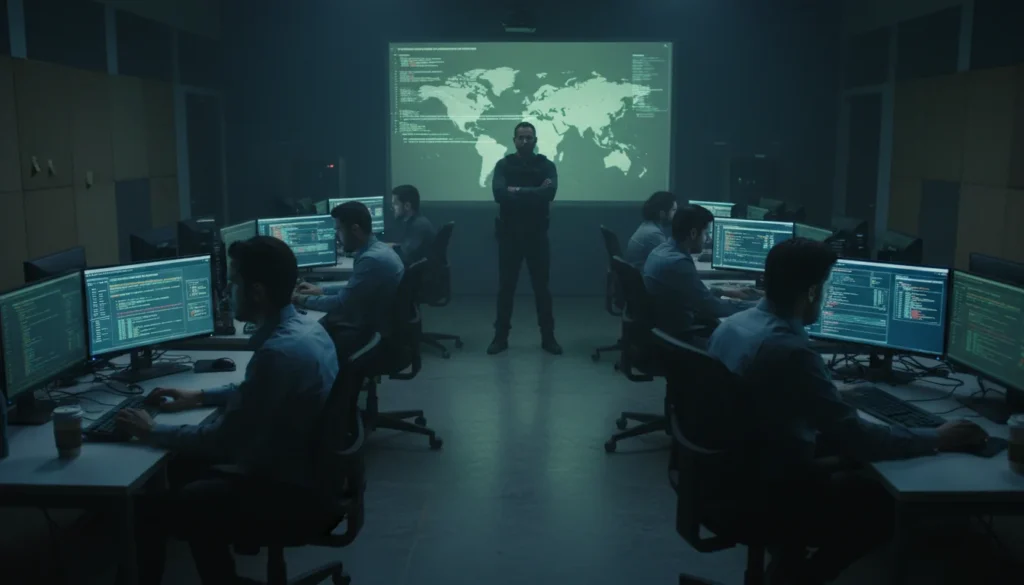
The U.S. military’s $200 million relationship with artificial intelligence firm Anthropic faces collapse after Defense officials demanded unrestricted access to the company’s technology for combat applications. Secretary of War Pete Hegseth personally delivered the Pentagon AI military contract ultimatum during a tense meeting with CEO Dario Amodei, setting a Friday deadline to remove usage constraints or face termination.
Pentagon AI Military Contract Ultimatum Tests Boundaries Of Tech Ethics
At stake is Anthropic’s position as the sole provider of advanced commercial AI currently operating within classified Defense networks. The company’s Claude system assisted in the January operation to capture Venezuelan leader Nicolás Maduro, but subsequent questions from Anthropic about specific military uses triggered the confrontation. Internal documents reveal the Pentagon interprets such inquiries as unacceptable oversight of lawful operations. For more information on AI in military operations, visit our article on The Future of AI.
“We cannot depend on a private company that maintains categorical restrictions on certain uses of its technology, even if those uses are lawful,” a senior Defense official stated anonymously. Hegseth reportedly compared the situation to being barred from using specific aircraft for missions, according to meeting transcripts.
Anthropic’s Red Lines: Autonomous Weapons And Domestic Surveillance
The AI firm maintains two non-negotiable restrictions: preventing Claude from powering fully autonomous weapons systems or enabling mass surveillance of American citizens. During negotiations, Amodei argued these boundaries wouldn’t interfere with legitimate military operations, emphasizing the company’s commitment to responsible AI development, similar to the principles outlined in our article on AI as Augmentation vs. Replacement.
Anthropic’s spokesperson released a carefully worded statement: “We continued good-faith conversations about our usage policy to ensure Anthropic can continue to support the government’s national security mission in line with what our models can reliably and responsibly do.” The declaration conspicuously avoids addressing the Pentagon’s demands directly.
Nuclear Options: Contract Termination And Emergency Powers
Should Anthropic refuse to comply by Friday, Defense Department leadership has outlined three escalation paths: immediate cancellation of the $200 million contract, designation as a supply chain risk that would blacklist the company from defense work, or invocation of the Defense Production Act to compel access. The latter would represent an unprecedented use of emergency federal powers over AI systems, which could have significant implications for the future of AI development, as discussed in our article on Top 5 Innovative Uses of Artificial Intelligence.
Meanwhile, Elon Musk’s Grok AI has reportedly agreed to unrestricted military use, giving Pentagon negotiators leverage. “Other frontier AI firms are close to similar arrangements,” confirmed a Defense official, suggesting Anthropic may soon find itself isolated in its resistance.
Broader Implications For Military-Tech Partnerships
The standoff represents the first major test of whether ethical guardrails on advanced AI will be set by private companies or government agencies. Industry analysts warn the outcome could redefine how Silicon Valley collaborates with national security entities, with potential ripple effects across the defense industrial base.
With Friday’s deadline looming, both sides acknowledge the dispute concerns control as much as battlefield applications. As one Pentagon insider noted: “This isn’t about autonomous targeting today—it’s about who decides what’s acceptable tomorrow.”
Definitions and Context
Artificial intelligence (AI) refers to the development of computer systems that can perform tasks that typically require human intelligence, such as visual perception, speech recognition, and decision-making. In the context of the Pentagon’s contract with Anthropic, AI is being used for military applications, including combat operations and intelligence gathering.
Autonomous weapons systems are AI-powered systems that can select and engage targets without human intervention. The development and use of such systems raise significant ethical concerns, as they have the potential to cause unintended harm to civilians and violate international humanitarian law.
Mass surveillance refers to the widespread collection and analysis of personal data, often without the knowledge or consent of the individuals being surveilled. In the context of the Pentagon’s contract with Anthropic, mass surveillance could involve the use of AI-powered systems to monitor and analyze the communications and activities of American citizens.
The Defense Production Act is a federal law that grants the President the authority to direct private companies to prioritize the production of certain goods and services in times of national emergency. In the context of the Pentagon’s contract with Anthropic, the Defense Production Act could be used to compel the company to provide unrestricted access to its AI technology for military use.
FAQ – Frequently Asked Questions
What is the Pentagon’s AI military contract ultimatum to Anthropic?
The Pentagon has given Anthropic an ultimatum to remove restrictions on its Claude AI system by Friday or risk contract termination and supply chain blacklisting. The ultimatum is a response to Anthropic’s refusal to provide unrestricted access to its AI technology for military use.
What are the implications of the standoff between the Pentagon and Anthropic?
The standoff between the Pentagon and Anthropic has significant implications for the future of AI development and the relationship between the military and tech companies. It raises questions about who should control the development and use of AI technology, and what ethical guidelines should be in place to ensure that AI is used responsibly.
What is the potential impact of the Defense Production Act on Anthropic and the AI industry?
The Defense Production Act could have a significant impact on Anthropic and the AI industry as a whole. If the Act is invoked, it could compel Anthropic to provide unrestricted access to its AI technology for military use, potentially undermining the company’s commitment to responsible AI development. It could also set a precedent for the use of the Act to control the development and use of AI technology in the future.
Last Updated on February 25, 2026 3:31 pm by Laszlo Szabo / NowadAIs | Published on February 25, 2026 by Laszlo Szabo / NowadAIs