LG AI Research’s Expert AI Strategy
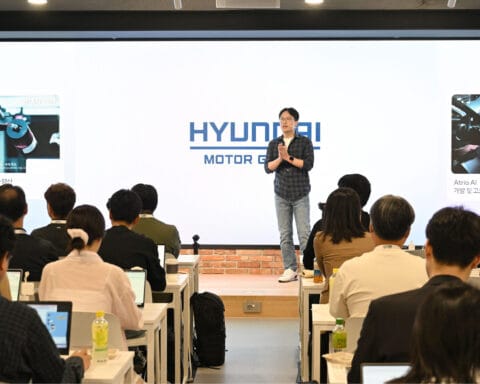
LG AI Research unveiled its Expert AI lineup at the LG AI Talk Concert 2026, marking a decisive pivot from general-purpose generative models toward domain-specific architectures. The company introduced specialized models tailored for manufacturing, scientific discovery, and financial services, each designed to embed deep industry knowledge rather than rely on broad pattern matching. This strategy reflects a growing consensus that the next wave of AI value will come from vertical integration, not horizontal scale.
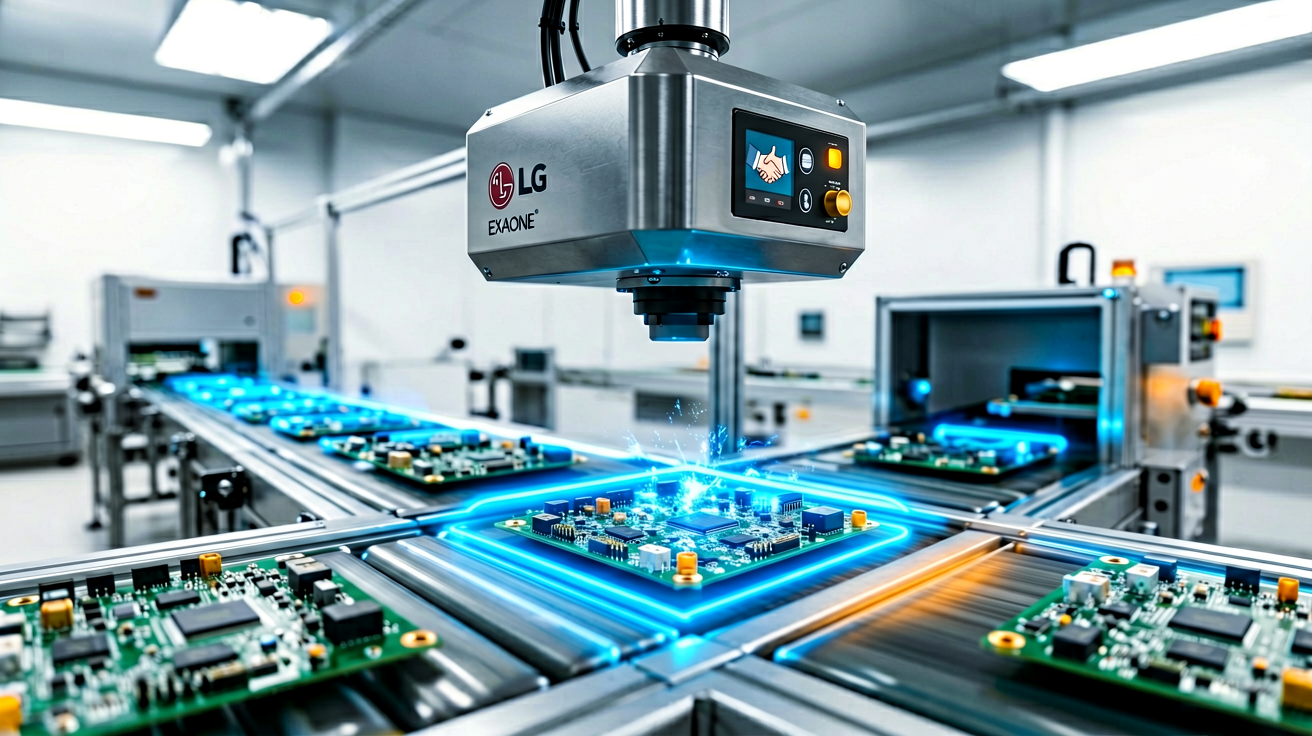
The centerpiece of the manufacturing push is EXAONE Omni-Inspect, a multimodal model trained to detect defects and optimize production lines in real time. In materials science, LG demonstrated how its expert system identified a promising hair-loss treatment candidate in a single day, compressing a process that typically takes months of laboratory screening. The company detailed that breakthrough in a recent disclosure showing how the model navigated chemical property spaces with minimal human supervision.
Financial services round out the initial trio, with a model fine-tuned on regulatory filings, market microstructure data, and risk frameworks specific to Korean and global banking. LG AI Research executives framed the lineup as a response to enterprise customers who have grown skeptical of generic large language models that hallucinate domain terminology and fail compliance checks. By constraining training data and evaluation benchmarks to verified industry corpora, the Expert AI series aims to deliver reliability that generalist models cannot guarantee.
Zero-Retraining Visual Inspection for Manufacturing
EXAONE Omni-Inspect eliminates the traditional retraining cycle by autonomously sampling production data, generating labels through a self-supervised anomaly detection pipeline, and updating its detection weights in near real time. The model monitors incoming image streams, identifies out-of-distribution samples without human annotation, and uses contrastive learning to refine defect boundaries across evolving product variants. This closed-loop architecture reduces deployment latency from weeks to hours when new components or lighting conditions enter the line.
LG Innotek plans to integrate the system across its camera module and semiconductor substrate lines by the third quarter, targeting a 40 percent reduction in false-positive rates compared to its current rule-based vision systems. The rollout will begin with a pilot cell that feeds live inspection data into the autonomous labeling engine, allowing engineers to validate model drift thresholds before full-scale adoption.
Building on the visual‑inspection breakthrough, LG AI Research expands its portfolio with data‑centric analytics and autonomous laboratory platforms that address complementary challenges across the enterprise.
EXAONE Tabular and Discovery: Predictive Analytics and Autonomous Labs
EXAONE Tabular extends the predictive layer by ingesting structured process logs, sensor readings, and quality metrics to forecast defect probabilities across assembly stages. Leveraging gradient‑boosted trees calibrated on historical yield data, the model enables engineers to intervene before a deviation reaches the inspection cell. Early deployments with LG Chem, D&D Pharmatech, and GS Caltex have shown a 30 percent reduction in scrap rates, and the framework is detailed in LG’s recent disclosure on factory‑inspection AI models.
EXAONE Discovery translates the same data‑centric philosophy into an autonomous laboratory that designs, executes, and analyzes experiments without human operators. In a proof‑of‑concept run, the system identified a promising hair‑loss treatment candidate in a single day, compressing months of screening into hours. The platform now runs closed‑loop synthesis cycles for LG Chem’s advanced materials pipeline, while LG AI Research also explores consumer‑facing AI such as AI‑powered dolls that monitor elderly health.
Key Facts: EXAONE Omni-Inspect Highlights
- Zero‑retraining architecture autonomously samples production data, generates labels via self‑supervised anomaly detection, and updates detection weights in near real time.
- Deployment latency drops from weeks to hours when new components or lighting conditions are introduced.
- LG Innotek targets a 40 percent reduction in false‑positive rates on camera module and semiconductor substrate lines by Q3.
- Lead‑time for model adaptation is cut dramatically, enabling rapid scaling across multiple inspection cells.
- Part of LG’s broader autonomous factory vision, which mirrors industry moves such as Chinese humanoid robots pushing boundaries.
- Closed‑loop pipeline integrates contrastive learning to refine defect boundaries across evolving product variants.
Frequently Asked Questions
How does EXAONE Omni-Inspect achieve zero‑retraining while still providing real‑time defect detection?
The model runs a self‑supervised anomaly detection pipeline that continuously samples live image streams and generates pseudo‑labels for out‑of‑distribution samples. It then applies contrastive learning to refine defect boundaries and updates its weights on‑the‑fly, eliminating the need for manual retraining cycles. This closed‑loop architecture allows detection weights to adapt within hours as new components or lighting conditions appear.
What false‑positive reduction can be expected when integrating EXAONE Omni-Inspect with LG Innotek’s camera modules, and what influences that performance?
LG Innotek targets roughly a 40 % reduction in false‑positive rates compared with its legacy rule‑based vision systems. The actual gain depends on factors such as camera resolution, illumination stability, and how tightly the model’s drift thresholds are calibrated during the pilot phase. Fine‑tuning these parameters for each product line can further improve accuracy.
Is it necessary to overhaul existing production hardware to deploy EXAONE Omni-Inspect, and what are the key integration requirements?
Deployment generally requires only a compatible camera feed and an edge compute unit capable of running the multimodal model; no major mechanical changes to the line are needed. Integration is performed via LG Innotek’s API, which streams images to the model and receives defect alerts in real time. Engineers must provision sufficient GPU/CPU resources and configure data pipelines to feed the autonomous labeling engine.
Last Updated on September 14, 2026 1:03 pm by Laszlo Szabo / NowadAIs | Published on September 14, 2026 by Laszlo Szabo / NowadAIs