OpenAI Rolls Out GPT-6 Sol and Luna Models
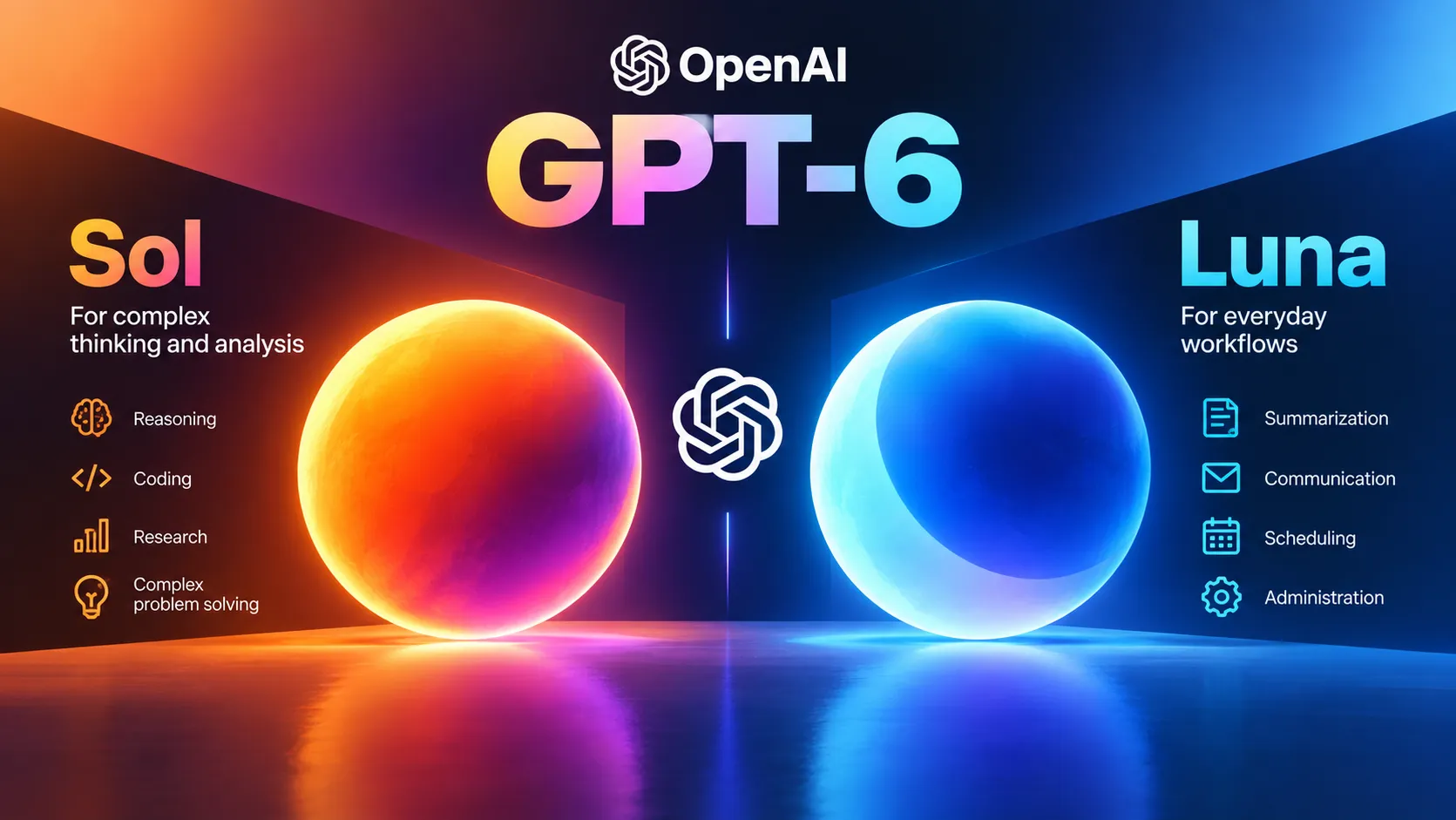
OpenAI has introduced GPT-6 Sol and Luna as the latest additions to its GPT-6 family, which also includes the Astra model designed for multimodal reasoning. Sol is positioned for complex, high-computation tasks requiring deep analytical capabilities, while Luna targets routine clerical and administrative workflows with optimized efficiency. Both models are now accessible through ChatGPT Work, Codex, and the OpenAPI.
For further details on the launch, see the official announcement introducing GPT-6 Sol and Luna.
These new offerings set the stage for a competitive response from other AI developers, as the industry watches closely to see how the latest models will shape the landscape.
How Anthropic’s Opus Release Fits Into the Rivalry
Anthropic released Claude Opus 5.5 just days before OpenAI’s GPT-6 Sol and Luna announcement, positioning it as a direct response to the escalating performance race in large language models. The company claims Opus 5.5 matches or exceeds GPT-6 Sol in reasoning benchmarks while maintaining lower latency in enterprise deployments.
Early evaluations suggest GPT-6 Sol leads in complex mathematical and scientific tasks, whereas Luna shows stronger efficiency in high-volume text processing—areas where Anthropic’s model remains competitive but not dominant. Both companies continue to iterate rapidly, with performance gains measured in single-digit percentage points across key metrics.
For a deeper analysis of Claude Opus 4.5’s capabilities and its role in Anthropic’s strategy, see our prior coverage of Claude Opus 4.5.
Amid this rivalry, OpenAI also announced a significant pricing adjustment for GPT-6 Sol, further influencing market dynamics.
GPT-6 Sol price drop
The halved API pricing for GPT-6 Sol directly reduces operational overhead for developers building AI-powered applications, particularly those requiring frequent inference calls during development and testing phases. This cost adjustment makes iterative experimentation more feasible without significant budget constraints.
Enterprises benefit from improved scalability when deploying Sol for coding assistants, automated debugging, or complex reasoning workflows, as the lower per-token cost aligns with efficiency gains from enhanced caching mechanisms and optimized inference pipelines. These technical improvements allow more requests to be served with fewer computational resources.
As a result, GPT-6 Sol becomes a more attractive option for organizations seeking high-performance language model capabilities at a lower total cost of ownership, especially in use cases involving sustained or high-volume usage where savings accumulate over time.
Frequently Asked Questions
How does the new halved API pricing for GPT-6 Sol affect per‑token cost compared to the previous rate and to GPT-6 Luna?
The new pricing cuts the per‑token cost for GPT-6 Sol by roughly 50%, bringing it closer to Luna’s rate while still being higher due to Sol’s advanced compute. For example, if Sol was $0.0008 per token, it is now about $0.0004, whereas Luna remains around $0.0003. This narrows the price gap and makes Sol more viable for high‑volume, complex workloads.
What technical changes enable the cost reduction for GPT-6 Sol without sacrificing performance?
OpenAI introduced optimized inference pipelines, improved caching of intermediate results, and more efficient hardware utilization that lower the number of GPU cycles per token. These enhancements reduce the compute required for each request, allowing the same performance levels at a lower operational cost. The model’s architecture remains unchanged, so accuracy and latency are preserved.
In which scenarios should developers choose GPT-6 Sol over Luna now that Sol’s price has dropped?
With the reduced cost, Sol becomes attractive for applications that need deep analytical reasoning, such as scientific calculations, code generation, or complex decision‑making, where the extra compute justifies the expense. Luna remains preferable for high‑throughput, routine text processing like email triage or data entry where efficiency is paramount. The price drop expands the break‑even point, making Sol viable for mixed workloads that combine occasional heavy reasoning with regular tasks.
Last Updated on September 23, 2026 5:38 am by Laszlo Szabo / NowadAIs | Published on September 23, 2026 by Laszlo Szabo / NowadAIs