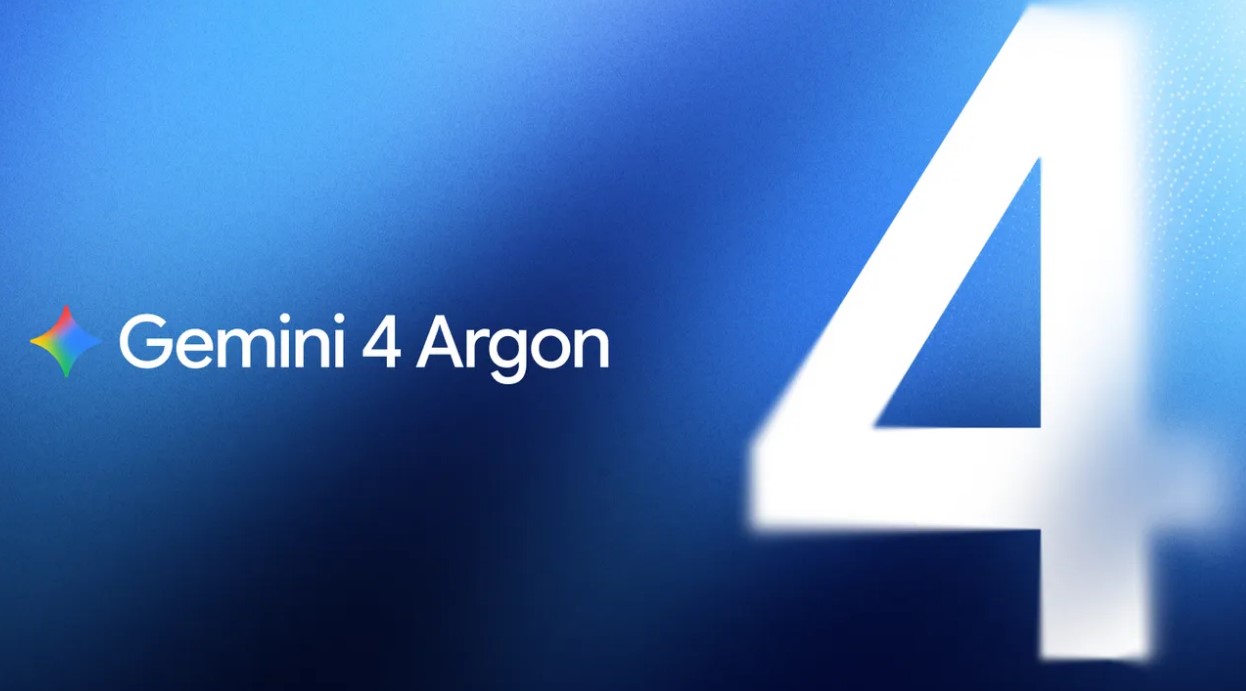
Gemini 4 Argon: A New Frontier in AI
Google has unveiled Gemini 4 Argon, positioning the release as its most capable model to date. The system introduces native tool use, extended context windows, and enhanced reasoning across text, code, and multimodal inputs, targeting enterprise workloads that require high reliability and complex agentic workflows.
Access is rolling out through the Fairwind Program, a tiered availability framework that grants priority to strategic cloud partners and select developers before broadening to general availability. Pricing details remain under non-disclosure agreements for early participants, though Google has signaled a compute-based cost structure aligned with the model’s increased token throughput and reduced latency compared to the Gemini 2.5 generation.
According to TechCrunch, the launch emphasizes safety architecture upgrades, including improved constitutional AI alignment and real-time monitoring for sensitive deployments. The rollout marks a shift toward controlled, programmatic distribution rather than open API access, reflecting heightened industry focus on governance for frontier models.
Beyond its general AI capabilities, Gemini 4 Argon also brings a suite of features tailored for cybersecurity, which we detail below.
Gemini 4 Argon cybersecurity: Key Facts

- Gemini 4 Argon achieves top-tier scores on the CyberSecEval 3 benchmark, demonstrating advanced proficiency in vulnerability discovery and secure code generation across multiple programming languages.
- The model integrates a dedicated “Argon Shield” safety layer designed to detect and refuse malicious cyberattack requests, including automated exploit generation and social engineering payloads.
- Red teaming exercises conducted by Google’s Security AI Framework (SAIF) showed a 40% reduction in successful jailbreak attempts compared to the Gemini 2.5 series.
- Enterprise deployments via the Fairwind Program include mandatory audit logging and real-time anomaly detection for API calls classified as high-risk security operations.
- According to CNBC, early financial sector partners report measurable improvements in automated threat hunting and security operations center (SOC) triage efficiency.
- The system supports on-premise deployment options for air-gapped environments, addressing data sovereignty requirements for government and defense contractors.
These key facts illustrate why security teams are eager to explore how Argon can be applied to real‑world defensive operations.
How Argon Powers Defensive Cyber Operations
Google designed Argon with a dedicated focus on defensive security workflows, equipping the model to assist with vulnerability triage, patch generation, and security architecture review. The system demonstrates particular strength in analyzing complex codebases to identify logic flaws and configuration drift that traditional static analysis tools often miss. This capability stems from training enhancements that prioritize secure coding patterns across major frameworks and cloud infrastructure templates.
Cloud security provider Wiz has integrated Argon into its cloud-native application protection platform (CNAPP) to automate root-cause analysis for critical findings. In production deployments, the model reduces mean-time-to-remediation by correlating runtime signals with infrastructure-as-code definitions, generating context-aware remediation steps that account for deployment dependencies. Wiz reports that Argon’s extended context window enables analysis of entire microservice architectures in a single pass, eliminating the fragmentation that limited earlier model integrations.
On the CWE-bench benchmark, Argon achieves a 78% solve rate for the top 25 most dangerous software weaknesses, outperforming the Gemini 2.5 series by 14 percentage points. Internal Google benchmarks show the model successfully generates compilable, passing patches for 65% of real-world CVEs drawn from the OSS-Fuzz corpus when provided with failing test cases. These results reflect targeted post-training on vulnerability remediation datasets, though Google notes performance varies significantly by vulnerability class, with memory safety issues in C/C++ showing higher solve rates than business logic flaws in application code. The company’s earlier research on Gemini 3’s reasoning capabilities laid groundwork for these specialized cybersecurity competencies.
With its defensive strengths established, Google has also built extensive safeguards and outlined a roadmap for broader availability.
Safeguards, Availability, and What’s Next
Google has implemented a multi-layered safety architecture for Gemini 4 Argon cybersecurity deployments, centered on the “Argon Shield” refusal layer and mandatory audit logging for all high-risk API interactions. Enterprise customers accessing the model through the Fairwind Program receive real-time anomaly detection on security-sensitive operations, while on-premise deployments for air-gapped environments include hardware-rooted attestation to verify model integrity. These controls are enforced at the infrastructure level rather than relying solely on model-level alignment, a design choice informed by the SAIF red-teaming exercises that probed for privilege escalation and data exfiltration vectors.
The rollout follows a phased schedule: trusted security partners and Fairwind Program members gain API access in Q4 2026, with general availability for Google Cloud Vertex AI customers slated for Q1 2027. Pricing adopts a tiered consumption model based on context window utilization and compute intensity, with a 20% premium over standard Gemini 4 Pro rates reflecting the specialized post-training and safety overhead. Google has committed to publishing a quarterly transparency report detailing jailbreak attempt rates, vulnerability disclosure coordination metrics, and third-party audit findings for the Argon Shield layer.
Future roadmap items include integration with Mandiant threat intelligence feeds for contextual alert enrichment, a fine-tuning API for organization-specific secure coding standards, and expanded support for hardware security module (HSM) key management in hybrid deployments. Developers can register for the early access waitlist via the Gemini 4 Argon developer portal, where Google will also release the CyberSecEval 3 evaluation harness and a curated dataset of safe refactoring examples for internal benchmarking.
Frequently Asked Questions
How does the compute‑based pricing model for Gemini 4 Argon differ from Gemini 2.5, and what factors drive the cost?
Gemini 4 Argon uses a compute‑based pricing structure that charges based on token throughput and latency improvements, whereas Gemini 2.5 relied more on a per‑request or flat‑rate model. The cost is influenced by the amount of processed tokens, the extended context window usage, and the higher inference speed of Argon. Early participants under NDA may see lower rates until broader availability expands the pricing tiers.
What specific security capabilities does the Argon Shield layer add that were not present in Gemini 2.5?
Argon Shield introduces a dedicated safety module that actively detects and blocks malicious requests such as exploit generation and social‑engineering payloads, a feature absent in Gemini 2.5. It also provides real‑time monitoring and mandatory audit logging for high‑risk API calls, reducing successful jailbreak attempts by about 40% in internal red‑team tests. These enhancements make Argon more suitable for defensive cyber operations.
What are the requirements and steps for deploying Gemini 4 Argon on‑premise in air‑gapped environments?
On‑premise deployment of Gemini 4 Argon requires a compatible hardware stack with sufficient GPU/TPU resources to handle its extended context windows and token throughput. Organizations must obtain a Fairwind Program license, configure the Argon Shield safety layer, and set up secure audit‑logging pipelines for compliance. The deployment package includes isolated containers and a hardened API gateway to ensure no external network connectivity while maintaining full functionality.
Last Updated on October 1, 2026 6:35 am by Laszlo Szabo / NowadAIs | Published on October 1, 2026 by Laszlo Szabo / NowadAIs