Anthropic’s New Bay Area Wet Lab
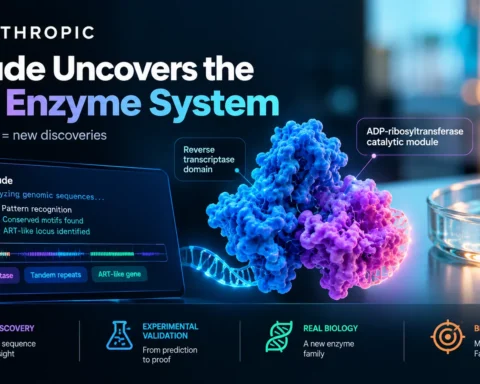
Anthropic has quietly established a wet biology laboratory in the Bay Area to support its expanding AI-driven drug discovery initiatives, according to a report by Reuters. The facility is designed to integrate experimental biology with the company’s advanced AI models, enabling iterative cycles of hypothesis generation, testing, and refinement.
The lab’s creation underscores Anthropic’s strategic push into biotechnology, where large language models like Claude Opus 4.5 are being adapted to analyze complex biological data and accelerate the identification of therapeutic candidates. This move aligns with a growing trend among AI firms to bridge computational insights with hands‑on laboratory validation.
To give readers a quick overview of what this new capability entails, the key facts are summarized below.
Key Facts
- Anthropic’s Bay Area wet lab supports AI-driven drug discovery by integrating experimental biology with its Claude models.
- The facility enables iterative cycles of hypothesis generation, testing, and refinement for therapeutic candidate identification.
- This initiative reflects a broader industry trend of AI firms combining computational insights with laboratory validation.
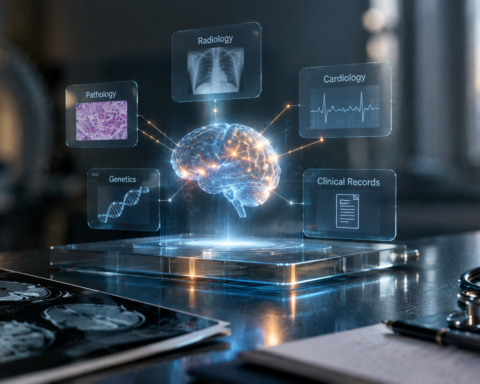
- Google’s Med-Gemini AI has demonstrated improved diagnostic accuracy over doctors in certain clinical tasks, as reported by Nowadais.
- Anthropic confirmed the establishment of its Bay Area wet lab for biology experiments, per a Reuters report cited by AI Weekly.
- The lab’s focus includes adapting large language models to analyze complex biological data for accelerated therapeutic development.
With those facts in mind, let’s explore how the wet lab functions as a bridge between Anthropic’s AI technology and real‑world biology.
Anthropic wet lab: Bridging AI and Biology
The wet lab operates as a hybrid research unit where biologists and AI engineers collaborate in real time to design, test, and refine therapeutic hypotheses generated by Claude models. Experimental results from the lab are fed back into the AI systems to improve predictive accuracy, creating a closed‑loop workflow that accelerates early‑stage drug discovery.
Anthropic’s partnership model emphasizes joint ownership of data and intellectual property, with external academic and biotech collaborators contributing biological expertise while gaining access to Anthropic’s computational infrastructure. This approach was formalized following the acquisition of Coefficient Bio, a synthetic biology startup specializing in high‑throughput protein engineering, which brought key talent and proprietary assay platforms into the lab’s operations.
To ensure rigor and reproducibility, Anthropic launched the Life Sciences Verification Program, which standardizes experimental protocols across projects and validates AI‑generated hypotheses through orthogonal assays. As Eric Kauderer‑Abrams, Head of Biological Sciences at Anthropic, stated, “We’re not just using AI to suggest molecules — we’re building a system where every prediction is testable, and every test improves the model.” Dario Amodei, CEO of Anthropic, added, “The wet lab is where our AI’s hypotheses meet the complexity of real biology — and where we learn whether our models truly understand life.”
Anthropic’s investment in biologist talent and wet lab infrastructure reflects a long‑term commitment to integrating experimental validation into AI‑driven discovery. Meanwhile, advances in medical AI continue to evolve, as demonstrated by models like Med42 v2, which outperforms earlier language models in clinical reasoning tasks.
The integration of AI and wet‑lab science raises important considerations, which are examined in the next section.
Implications, Risks, and the Life Sciences Verification Program
Anthropic researchers caution that integrating AI with experimental biology introduces novel safety considerations, particularly around model reliability and unintended biological consequences, emphasizing that verification must keep pace with hypothesis generation speed. Dario Amodei has called for industry‑wide self‑regulation, urging AI developers to adopt rigorous validation frameworks before deploying models in life sciences contexts. Industry observers note that such proactive measures could set a precedent for responsible innovation at the intersection of AI and biotechnology.
Frequently Asked Questions
How does Anthropic combine Claude model predictions with wet‑lab experiments in its drug discovery workflow?
Claude models generate therapeutic hypotheses that are immediately translated into experimental protocols in the Bay Area wet lab. Researchers test these hypotheses using high‑throughput assays, and the resulting data are fed back into the models to refine their predictive algorithms. This closed‑loop process accelerates iteration cycles and improves model accuracy over time.
What specific assays are employed in the Life Sciences Verification Program to validate AI‑generated hypotheses?
The program uses orthogonal assays, including biochemical binding tests, cell‑based functional screens, and high‑throughput protein engineering assays inherited from the Coefficient Bio acquisition. These diverse assay types ensure that predictions are evaluated across multiple biological contexts, enhancing confidence in the results before advancing candidates.
Can external biotech partners access Anthropic’s wet‑lab facilities, and how is data and IP handled in such collaborations?
Yes, Anthropic’s partnership model allows academic and biotech collaborators to use the wet‑lab infrastructure while sharing access to its computational platform. Data and intellectual property are jointly owned, with clear agreements that delineate contributions from both parties, ensuring transparent sharing of results and downstream rights.
Last Updated on October 10, 2026 12:34 pm by Laszlo Szabo / NowadAIs | Published on September 21, 2026 by Laszlo Szabo / NowadAIs